🎬 Black Bear Movie Explained – A Mind-Bending Look at Identity, Art, and Truth
Introduction: What Is Black Bear?
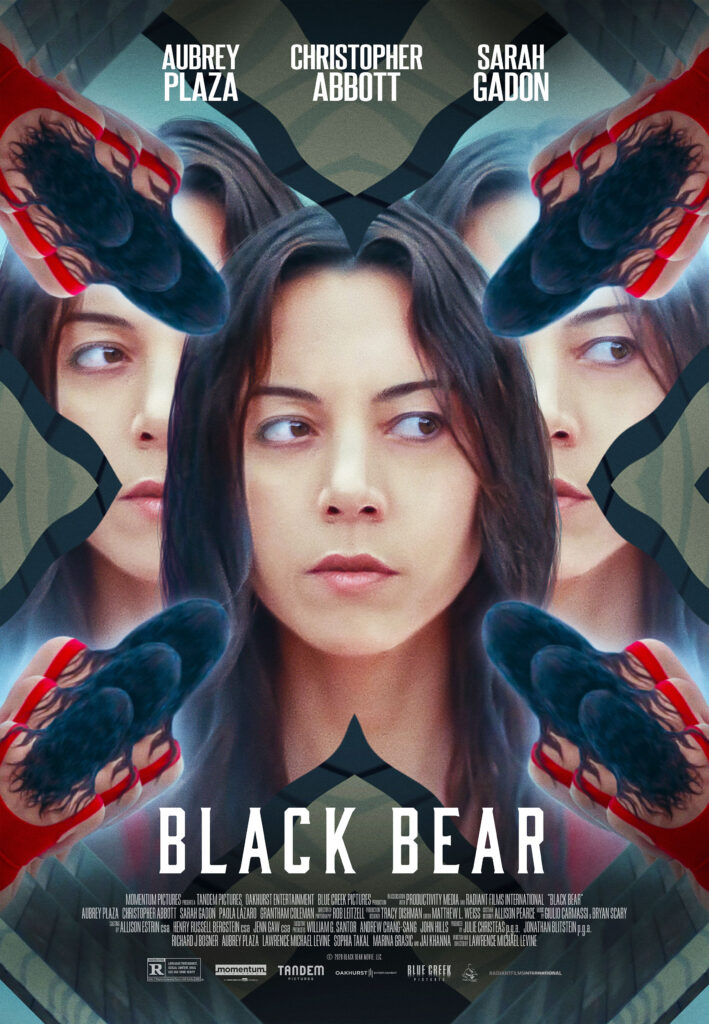
The Black Bear movie (2020) is not your typical indie psychological drama. Written and directed by Lawrence Michael Levine, and starring Aubrey Plaza, Christopher Abbott, and Sarah Gadon, this film walks the razor’s edge between reality and fiction, art and manipulation. But what exactly is it about?
That question is harder to answer than it might seem — and that’s by design. Black Bear is the kind of movie that shifts under your feet as you watch, daring you to interpret its twists while holding its real meaning just out of reach.
In this Black Bear movie analysis, I’ll explore how the film’s two-part structure, shifting identities, and thematic layers work together to create a surreal experience about art, insecurity, and control.
Plot Structure: One Movie, Two Realities
The Black Bear movie is split into two halves — both involving the same three actors, the same setting, and many of the same lines of dialogue — but they’re not the same story.
Part One: The Guest
In the first half, we follow Allison (Aubrey Plaza), a former actress turned filmmaker who retreats to a lakeside cabin for inspiration. She’s hosted by Gabe and Blair, a couple with their own messy relationship dynamics. Over dinner and drinks, tensions rise, truths are questioned, and everything culminates in a devastating turn.
Or so it seems.
Part Two: The Production
Suddenly, the movie resets. The characters keep their names, but their roles have changed. Now, Allison is an actress in a film directed by Gabe, who is emotionally manipulating her — with Blair’s help — to elicit a stronger performance. It’s chaotic, emotionally violent, and metafictional.
Aubrey Plaza’s Best Performance?
Let’s talk about Aubrey Plaza. In the Black Bear movie, she delivers what may be her most complex and vulnerable performance to date. In Part One, she’s calm, clever, and enigmatic — in Part Two, she’s shattered and chaotic, forced to perform under abusive conditions.
It’s a performance within a performance, and it works because Plaza never lets us feel like we have a solid grasp on Allison. She shifts between self-awareness and emotional collapse so fluidly that we’re left just as disoriented as her.
Themes: Identity, Control, and the Performance of Pain
At its core, the Black Bear movie is about the cost of creation — emotional, physical, and ethical. It blurs the line between what’s real and what’s performed to such an extent that the audience begins to question their own perception.
- Control is a major theme. Who controls the narrative — the writer? The director? The actors? The story itself?
- Identity is fluid. Allison is not just a character but also an avatar for multiple interpretations of what it means to be a woman in art, a muse, and a subject of emotional exploitation.
- Suffering as a tool — Part Two critiques the way film productions often demand emotional trauma from actors, especially women, under the guise of “great art.”
Why It Feels Like a Puzzle
Many viewers finish the Black Bear movie unsure what they’ve just watched. That’s intentional.
The film is self-reflexive, meaning it’s constantly aware that it’s a film. The characters echo their lines, scenes double back on themselves, and emotional beats are recontextualized from act to act.
And that bear? It’s real. Maybe. Or maybe it’s just a metaphor for Allison’s inner chaos, her creative block, or the threat of being consumed by the story she’s trying to tell.
Is Black Bear Based on a True Story?
No — but it often feels like it could be. Writer-director Lawrence Michael Levine has said the film was inspired by his own struggles with filmmaking and relationships. It’s a personal, psychological take on the creative process, but don’t expect clear answers or tidy arcs.
Instead, expect a film that demands interpretation and rewards multiple viewings.
Final Thoughts: What Does It All Mean?
The Black Bear movie isn’t trying to trick you — it’s trying to involve you. It asks you to question not just the characters’ motives, but the very structure of storytelling itself.
It’s about how we tell stories, why we hurt people in the process, and whether the pursuit of truth through fiction is ever really honest.
Black Bear doesn’t give us easy answers — and that’s what makes it such a compelling piece of modern independent cinema.
Links
📺 Here are some related links and videos
- MikeOnMedia Reviews
- MikeOnMedia Analysis
- The HIDDEN Meaning of the Black Bear Movie (2020) (Black Bear Movie Explained on YouTube)
- Heat Ending Explained (1995) | Why It’s BETTER Than You Think
Video Chapters – Black Bear Movie
00:00 Introduction
00:42 Summary
03:38 Part 1 vs. Part 2
04:39 Inner Dialogue
06:36 Incompetence
07:52 Drinking During Pregnancy
09:34 Compliments
11:19 Black Bear Symbolism
19:38 Spilling Coffee
21:13 Why Black Bears?
21:51 Conclusion