🎬 Heat Ending Explained (1995) — Why It’s Better Than You Think | MikeOnMedia
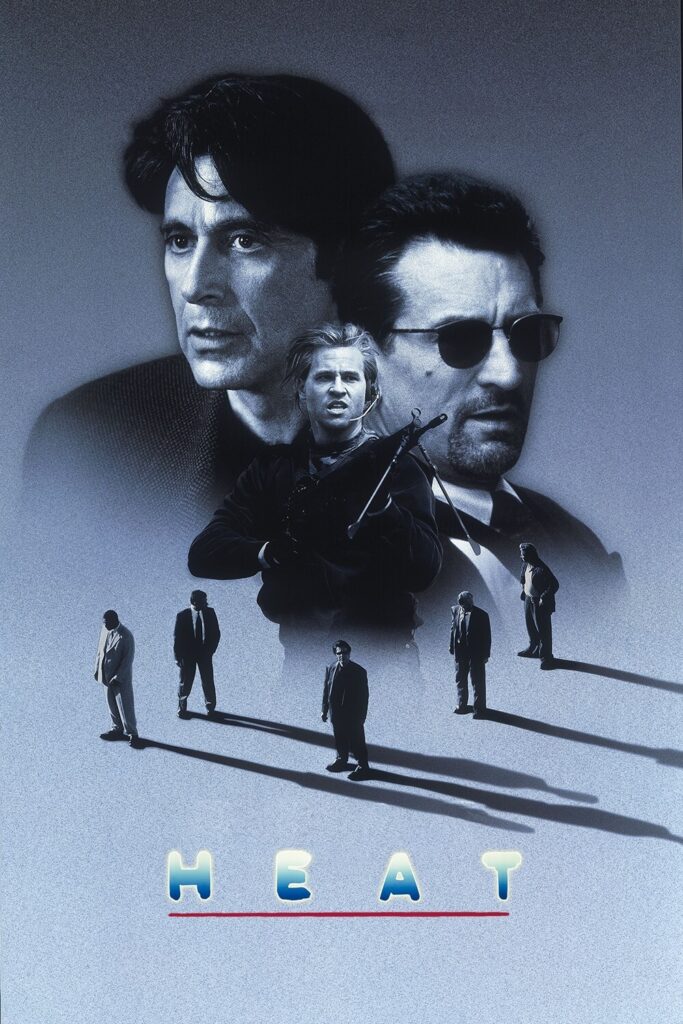
Table of Contents – Heat Ending Explained
Introduction
Michael Mann’s Heat (1995) isn’t just a standout crime drama — it’s a complex, multi-layered masterpiece filled with unforgettable characters, atmospheric visuals, and an underlying theme that most viewers only half grasp. In this Heat movie analysis, I’ll break down that theme — the so-called 30-second rule — and show you how it isn’t just a line of dialogue, but the very spine of the film.
A Crime Drama with Real Depth
From its opening armored car heist to its heart-wrenching final airport chase, Heat is a gripping experience. It’s a movie that gives you cops and criminals, but refuses to pick sides. Both are professionals. Both are human. And both are on an inevitable collision course.
What separates Heat from other films in the genre is its depth — it’s not just about what happens, but why.
The Cast and Characters
Led by Al Pacino as obsessive LAPD detective Vincent Hanna and Robert De Niro as career thief Neil McCauley, Heat is stacked with talent: Val Kilmer, Tom Sizemore, Jon Voight, Danny Trejo, Ashley Judd, and a young Natalie Portman.
Each actor brings nuance to their role, portraying characters caught between professionalism and personal longing. But despite all the drama and action, everything in Heat orbits a central thematic rule.
Understanding the 30-Second Rule
Early in the film, Neil McCauley explains his guiding philosophy:
“Don’t let yourself get attached to anything you are not willing to walk out on in 30 seconds flat if you feel the heat around the corner.”
It’s not just a catchy line — it’s a worldview. This 30-second rule isn’t about crime; it’s about detachment. Neil uses it to survive. But like all rigid philosophies, it’s destined to be tested.
Relationships vs. Rules
Despite preaching this no-attachment creed, Neil violates it — slowly and subtly.
When we first see him at a dinner with his crew and their families, he looks isolated, prompting him to reconnect with Eady, a woman he’s barely begun to trust.
The LAPD is surveilling Neil’s crew, and Vincent labels Neil “the loner” — unaware that Neil is literally on his way to break that loner mold.
This tension between ideals and emotions is where Heat truly begins to boil.
The Coffee Scene: Icons Collide
Midway through the film, we get the legendary coffee shop scene — the first time Pacino and De Niro shared the screen. But beyond its cinematic significance, it’s a powerful character moment.
Here, Neil references the 30-second rule for the third time. He and Vincent may be enemies, but they understand each other. Both are consumed by their work. Both have sacrificed normal lives.
This mutual recognition makes the final confrontation inevitable — and tragic.
A Heist, a Violation, and the Fallout
When Neil and his crew decide to pull off the bank job — despite knowing the police are watching — it marks the second major violation of the 30-second rule.
The decision isn’t driven by love, but by greed and momentum. And the result is the legendary downtown L.A. shootout — a thunderous, technically perfect sequence that leaves most of the crew dead.
Neil and Chris (Val Kilmer) survive, but it’s clear that fate has started closing in.
The Fatal Delay
After escaping with Eady, Neil is almost free. He’s literally driving toward the airport — toward a clean exit. But when his contact Nate tells him that Waingro, the man who betrayed him, is nearby, Neil can’t resist.
He turns back to settle the score.
And this is where the writing and visual storytelling shine: Neil drives through a bright tunnel, symbolically exposing his inner contradiction — the man who lives by the 30-second rule, now ignoring it completely.
The Tragic Precision of Heat
After killing Waingro, Neil hesitates when he sees Vincent. He should walk away, but he pauses — for 43 seconds. That’s 13 seconds longer than the rule he’s quoted three times throughout the film.
This delay seals his fate.
In the final moments, Vincent spots Neil, chases him, and ultimately shoots him — only because of a well-timed runway light, a perfectly placed stroke of fate that gives Vincent the split-second advantage.
Had Neil stuck to his rule, he likely would have escaped or even killed Vincent.
Final Thoughts
As this Heat Ending Explained analysis has shown, the 30-second rule isn’t just a piece of cool dialogue — it’s a fatalistic philosophy that defines Neil’s character and ultimately explains his downfall.
Without understanding this theme, Heat is a very good crime movie.
But with it, Heat becomes something more: a modern tragedy, wrapped in gunfire, drenched in noir, and driven by one of the tightest scripts ever written.
It’s a masterpiece. And it’s time it gets the deeper recognition it deserves.
Links
📺 Here are some related links and videos
- MikeOnMedia Reviews
- MikeOnMedia Analysis
- https://web.archive.org/web/20171101084416/https://pmcdeadline2.files.wordpress.com/2015/09/heat-pg-90-95-coffee-shop-watermark.pdf
- https://deadline.com/2015/09/michael-mann-heat-al-pacino-robert-de-niro-ferrari-christian-bale-toronto-film-festival-1201529118/
- https://www.esquire.com/uk/culture/film/a36208553/why-heat-could-be-the-greatest-oscars-snub-ever/
- Heat Ending Explained (1995) | Why It’s BETTER Than You Think (Heat Ending Explained video on YouTube)
- The HIDDEN Meaning of the Black Bear Movie (2020)
Video Chapters – Heat Ending Explained
00:00 Introduction
01:25 Neil’s 30-Second Rule
02:04 30-Second Rule – Part 1 – Reminding Chris
02:42 Attachments
03:40 30-Second Rule – Part 2 – LAPD Heat
04:23 30-Second Rule – Part 3 – The Coffee Scene
05:35 Bank Robbery and Aftermath
07:11 Climax
08:16 Neil Would Have Lived…
09:15 Conclusion